Key Findings
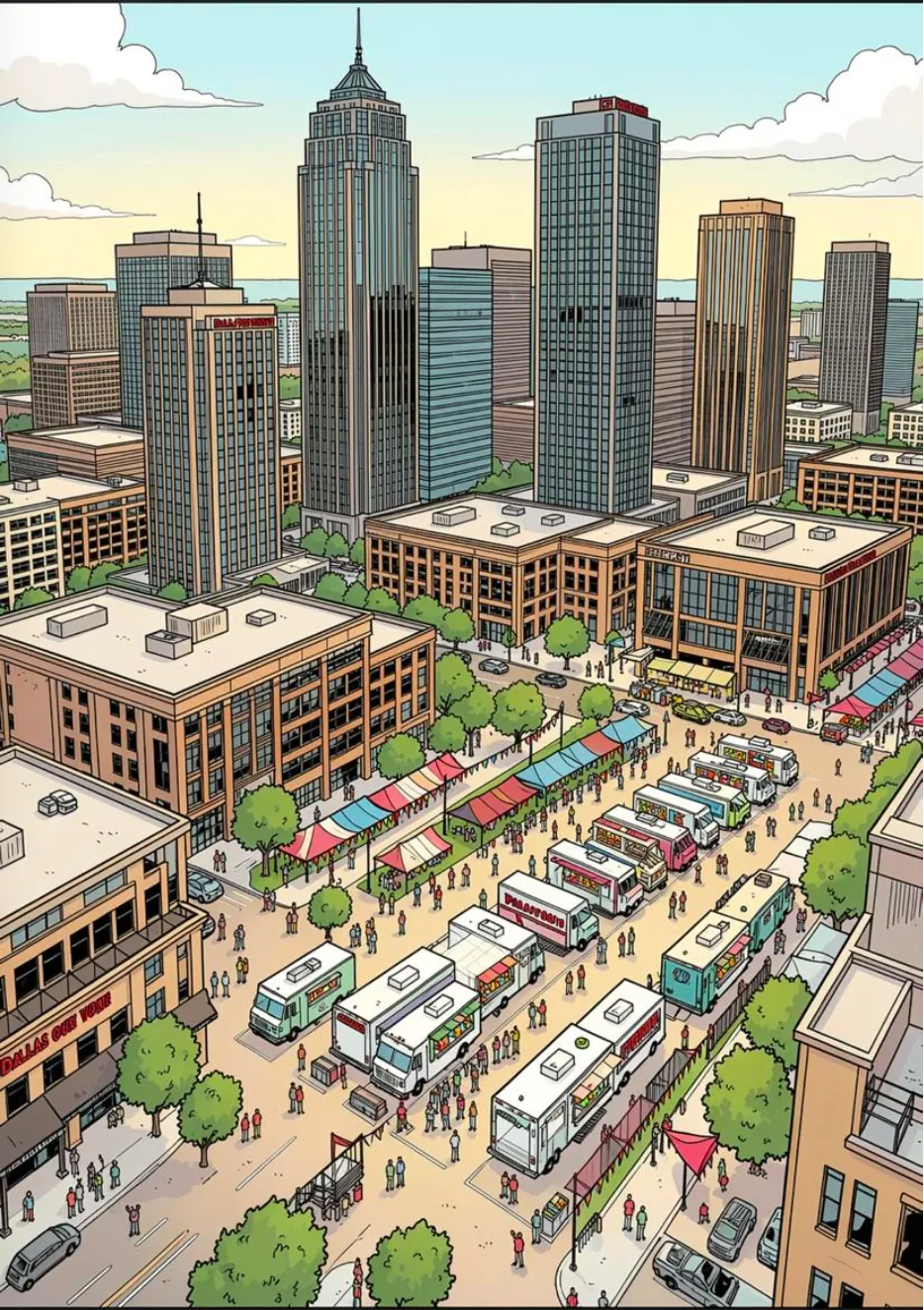
Dallas–Fort Worth is one of the most active food truck markets in the country. What was once a festival-and-street-corner business has evolved into a staple of corporate catering, driven by a sprawling metroplex of distribution centers, hospitals, construction sites, and business parks that need to feed people where they work — not where restaurants are. This report examines 439 confirmed food truck events across the Dallas metroplex to understand who is booking, what they’re ordering, how much they’re spending, and where the market is headed.
The picture that emerges is distinctive. Dallas’s food truck economy isn’t a consumer trend — it’s a B2B infrastructure story. Eighty percent of bookings come from employers, not individuals. More than half of all events serve frontline-worker industries: logistics, healthcare, construction, manufacturing. The average host-paid event runs $2,570, and American comfort food accounts for nearly half of all cuisine selections. These aren’t lifestyle purchases; they’re workplace meal solutions at scale.
Five things the data tells us about Dallas
- It’s an employer market. Corporate events account for 80% of food truck bookings in Dallas — employee appreciation, milestones, and recruitment events make up the backbone of demand.
- Frontline workers are the core audience. More than 54% of bookings originate from logistics, healthcare, construction, manufacturing, and transportation — industries where on-site meal delivery isn’t a perk but a necessity.
- Comfort food dominates. American comfort food (burgers, sandwiches, classic menus) captures 44% of cuisine selections, followed by dessert trucks at 32%. Crowd-pleasing beats niche in a market this workforce-heavy.
- The economics favor scale. Host-paid events average $2,570, while a typical 50-guest event runs $750–$1,000. BBQ and pizza command premium minimums; tacos and hot dogs offer lower entry points.
- New state regulation changes the game. Texas’s 2026 statewide permitting law replaces city-by-city licensing, reducing operator friction and expected to accelerate supply growth across the DFW metroplex.
Figure ES-1 — Scope of the dataset
| Dimension | Figure | Detail |
|---|---|---|
| Confirmed events analyzed | 439 | Dallas–Fort Worth metroplex |
| Corporate event share | 80% | Employer-booked events |
| Frontline-worker share | 54% | Logistics, healthcare, construction, etc. |
| Avg. host-paid event | $2,570 | Typical ~50 guests at $12–$16/item |
| Operating trucks (DFW) | ~1,000 | One of the largest ecosystems in Texas |
| Top cuisine | American (44%) | Burgers, sandwiches, classic menus |
Corporate Spending Drives Demand
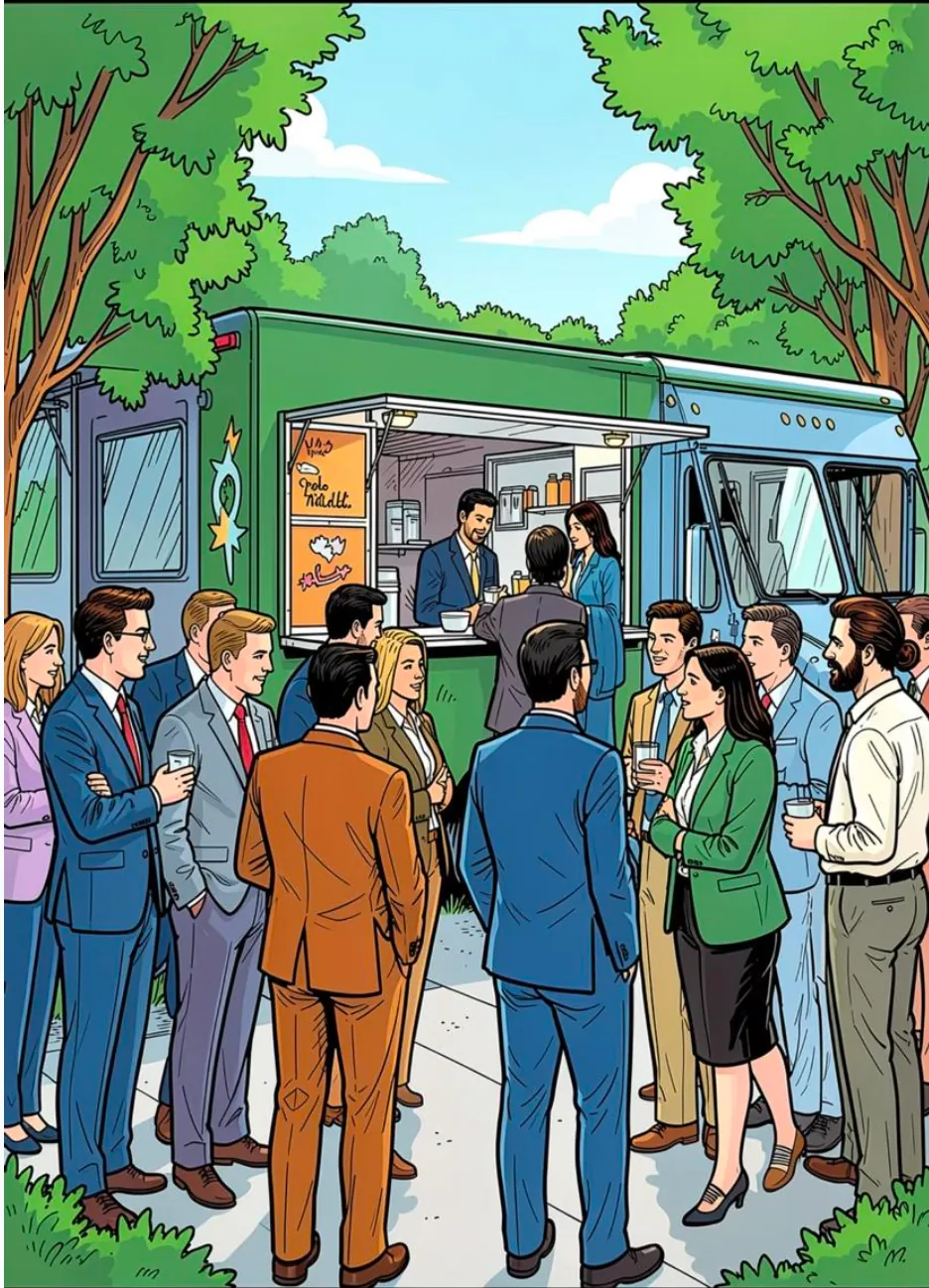
The single most defining feature of Dallas’s food truck market is who is buying: employers, not consumers. Corporate events account for 80% of all food truck bookings in the metroplex, with personal events — private parties, community gatherings, celebrations — making up the remaining 20%. This ratio is unusually corporate-heavy even by the standards of a category that skews B2B nationally — though not unique in Texas: in our Houston market report, organizations drive nearly 90% of bookings. It reflects the structural reality of the DFW economy.
The driver is competition for talent. In a labor market where warehouse workers, nurses, and construction crews have options, companies are investing in employee appreciation experiences that create visible, memorable moments. A food truck parked outside a distribution center at lunchtime isn’t just a meal — it’s a signal that management notices and values the workforce. Food trucks have evolved from festival novelties into a strategic workplace culture tool, and Dallas employers have figured this out faster than most.
Employer-booked events for employee appreciation, milestones, safety celebrations, and recruitment.
Private celebrations, birthday parties, community gatherings, and neighborhood events.
Dallas Is a Frontline Workforce Market
More than 54% of all food truck bookings in Dallas originate from industries built around frontline workers — logistics, healthcare, manufacturing, construction, and transportation. This is the defining demand signal in the DFW market and the reason food trucks have become essential infrastructure rather than optional entertainment.
Dallas–Fort Worth is one of the nation’s largest hubs for distribution centers, warehouses, and hospitals. These are workplaces where employees can’t easily leave for lunch — and where traditional catering is impractical. Food trucks solve a genuine logistical problem: they bring hot, made-to-order meals directly to the job site with no setup, no cleanup, and enough flexibility to serve multiple shifts. For a warehouse with 200 workers on staggered breaks, a food truck in the parking lot is the most efficient feeding solution available.
Figure 2 — Booking share by frontline sector
Approximate shares read from source data. These six sectors together account for ~67% of bookings; remaining 33% spans office, retail, education, and other industries.
Why this matters for operators
Frontline worksites often have limited parking, strict entry protocols, and shift-based schedules. Operators who adapt to these constraints — arriving early, serving efficiently, accepting purchase orders and invoicing — gain a durable competitive advantage in Dallas’s largest demand segment.
Host-Paid vs. Attendee-Paid Events
Two payment models define the Dallas food truck catering market, and they serve fundamentally different purposes. In the host-paid model, an employer covers the full cost of meals — common for appreciation days, safety milestones, and company celebrations. In the attendee-paid model, individuals buy their own food from the truck — common at apartments, office parks, and recurring lunch programs.
In Dallas, for every 1 host-paid event there are approximately 2.35 attendee-paid events. This ratio reveals how the market actually works: attendee-paid events are the high-frequency engine that builds venue relationships and embeds food trucks into the rhythms of a workplace or community. Host-paid events are the high-value transactions that generate the bulk of revenue. The two models feed each other — a successful weekly attendee-paid lunch run often converts into quarterly host-paid appreciation events once the organizer sees the format work.
Employer covers full cost. High-ticket B2B sale. Revenue driver.
Individuals pay. Zero host commitment. Trial mechanism & relationship builder.
The Most Popular Food Truck Cuisines in Dallas
American comfort food dominates Dallas at 44% of all cuisine selections — burgers, sandwiches, and crowd-pleasing menus that appeal to large, diverse groups. This isn’t a lack of culinary imagination; it’s the rational response to feeding 50–200 people with varying tastes in a single service window. When an HR manager books a truck for a warehouse crew or a property manager feeds an apartment complex, cuisines with universal appeal minimize complaints and maximize participation.
Dessert trucks hold a surprising second place at 32%, reflecting their role as the go-to add-on for employee appreciation events. A dessert truck paired with a savory truck is the Dallas playbook for a memorable company event — it signals “celebration” in a way that lunch alone doesn’t. Mexican/Tex-Mex and BBQ round out the top four, reflecting the DFW region’s deep culinary roots in these traditions.
Figure 4a — Cuisine popularity (share of selections)
American (44%) and Dessert (32%) are stated explicitly in source data. Mexican/Tex-Mex, BBQ, and Other are approximate readings.
The dominance of American comfort food and dessert together capturing 76% of selections tells operators something important about the Dallas market: this is a volume game, not a niche game. Operators who can execute familiar formats at scale — fast service, consistent quality, broad appeal — will find more demand than they can handle. The remaining 24% still represents a meaningful number of events for specialty operators, but the core Dallas market rewards reliability over novelty.
Seasonal Demand Patterns
Dallas benefits from a mild climate that supports outdoor food truck events for much of the year. Unlike northern markets where winter effectively shuts down outdoor catering, DFW’s winters are moderate enough to sustain baseline demand. Still, seasonality is real: only 15% of annual bookings fall between December and February, while summer captures the lion’s share.
The seasonal pattern in Dallas differs from the national average in an important way: summer, not spring, is peak season. Nationally, March through May is the commercial center of gravity for food truck catering. In Dallas, June through August leads at roughly 32% of annual bookings. The likely explanation is weather — DFW springs are pleasant, but summers drive the strongest outdoor-event programming, especially for apartment communities and business parks looking to activate outdoor common areas.
Figure 5a — Seasonal booking distribution
Mar–May
Jun–Aug
Sep–Nov
Dec–Feb
Dessert trucks experience the most dramatic seasonal swings of any category. Their summer peak (40%) is nearly six times their winter trough (7%). This makes intuitive sense — frozen treats and outdoor celebrations go together — but it has real business implications. Dessert operators in Dallas need to plan for a four-month revenue window (roughly May through August) that must sustain them through a lean winter. Savory operators, by contrast, enjoy a more balanced year-round profile, with fall still pulling a respectable 25% of bookings.
What Food Truck Catering Costs in Dallas
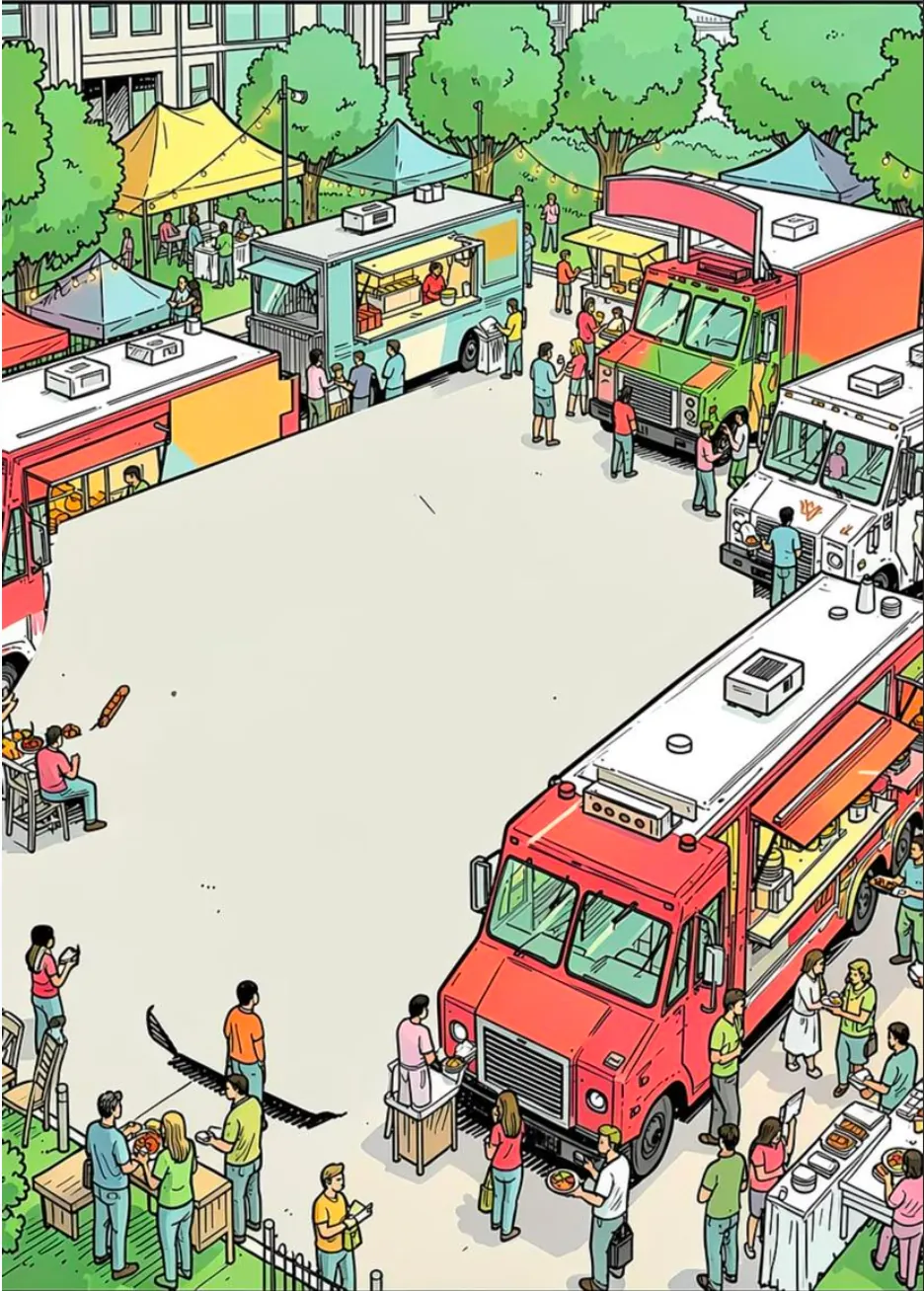
The average host-paid food truck event in Dallas runs $2,570 — higher than the national average of $1,799. This premium reflects the Dallas market’s corporate-heavy mix: employer-funded events tend to be larger, more structured, and more willing to pay for premium cuisine and service than casual community events. For a more typical 50-guest event, the range tightens to $750–$1,000.
Cuisine type is the primary pricing lever. BBQ and pizza command the highest minimums due to prep time and ingredient costs, while tacos, hot dogs, and beverage trucks offer lower entry points. For corporate buyers budgeting their first food truck event, the per-item range of $10–$18 is the most useful planning number — multiply by expected headcount and add 15–20% for appetite variability.
Average Event
Host-paid, all sizes
50-Guest Event
Typical mid-range
50-Guest Range
Common booking range
Figure 6 — Average cuisine pricing & minimums in Dallas
| Cuisine Type | Avg. Price / Item | Avg. Minimum |
|---|---|---|
| BBQ | $15–$18 | $800 |
| Pizza | $14–$16 | $1,000 |
| Asian | $13–$15 | $800 |
| Burgers | $13–$15 | $500 |
| Tacos / Mexican | $12–$14 | $500 |
| Hot Dogs | $10–$12 | $400 |
| Beverages (coffee/tea) | $5–$8 | $350 |
Minimums represent the lowest amount a truck will typically accept to come out to an event. Highlighted minimums ($800+) reflect higher prep and ingredient costs.
For context: traditional sit-down catering for a 50-person corporate lunch in Dallas typically runs $1,500–$3,000 ($30–$60/head). A comparable food truck event costs $750–$1,000 — a 50–67% savings with fresher food, employee choice, and zero venue setup. Even against boxed-lunch delivery ($12–$20/head for pre-made food), food trucks deliver a meaningfully better experience at a comparable or lower price. That math is why corporate adoption keeps accelerating.
The Dallas–Fort Worth Food Truck Ecosystem
With approximately 1,000 operating food trucks, Dallas–Fort Worth hosts one of the largest food truck ecosystems in Texas and among the largest in the country. The fleet spans a wide range of cuisines, price points, and operating models — from trucks that exclusively serve construction sites to permanently stationed concepts to catering-focused operations that only book private events.
Quality standards are rising across the ecosystem. Customers increasingly prioritize reliability, professionalism, food quality, and operational experience over novelty or price alone. Insurance compliance, health permits, and consistent online reviews have become table stakes for trucks that want to serve the corporate market. This flight to quality benefits the category overall: as professional operators raise the bar, corporate buyers gain confidence in the format, which drives more bookings, which attracts more professional operators. It’s a virtuous cycle that Dallas is currently in the middle of.
The Economics of Operating a Food Truck in Dallas
While consumer demand remains strong, food truck operators in Dallas face increasing operational costs that compress margins. Fuel, labor, insurance, food costs, and vehicle maintenance have all risen materially in recent years. Fuel costs in particular have impacted the DFW market — mobile operations feel gasoline price swings directly, and many trucks have raised prices to accommodate higher costs.
The cost pressures are real but manageable for operators who shift toward the corporate catering model. Host-paid events at $2,570 average offer significantly better unit economics than street vending or festival work, where revenue depends on foot traffic and weather. A truck that fills three corporate events per week at $800+ each generates more predictable revenue than one chasing daily lunch crowds. This economic reality is accelerating the professionalization of the DFW food truck fleet.
Gasoline price volatility directly impacts mobile operations. Dallas operators report fuel as their fastest-rising cost category.
Rising wages and persistent staffing challenges, particularly for weekend and evening shifts.
Supply chain disruption and inflation continue to drive ingredient prices up, especially for proteins and specialty items.
Commercial auto and liability premiums have increased, with some operators reporting 15–25% year-over-year rises.
Aging truck fleets and higher parts costs create unpredictable capital expenses.
Texas’s New Statewide Food Truck Permitting Law
Beginning in 2026, Texas is transitioning from a fragmented city-by-city permitting model to a unified statewide licensing framework for food trucks. This is the most significant regulatory shift to hit the Texas food truck industry in years, and its effects on the Dallas market will be substantial.
Under the old system, an operator who wanted to serve events across Dallas, Fort Worth, Plano, and Arlington needed separate permits from each city — each with its own application process, fees, inspection schedules, and renewal timelines. The administrative burden alone kept many operators confined to a single jurisdiction. The new statewide framework eliminates that friction, enabling operators to serve the entire DFW metroplex (and beyond) under a single license.
One permit, one process, one renewal. Operators save weeks of paperwork and hundreds in duplicate fees.
Trucks can serve Dallas, Fort Worth, Plano, Arlington, and beyond without separate permits for each.
Lower barriers to entry mean more trucks can enter the market, helping close the demand-supply gap.
Buyers gain access to a wider pool of operators and cuisines that were previously locked out of their city.
Industry experts expect the law to support continued growth and innovation across the Texas food truck sector. For the Dallas market specifically, the impact may be most visible in the suburbs and satellite cities — areas that previously had fewer truck options because operators couldn’t justify the cost of a separate permit for occasional events outside their home jurisdiction.
Outlook for the Dallas Food Truck Industry
The outlook for Dallas food trucks is overwhelmingly positive, driven by a convergence of economic, demographic, and regulatory factors that all point in the same direction: more demand, more supply, and a more professional market.
Four Forces Shaping the Next 12 Months
Food trucks have evolved from niche vendors into a mainstream catering solution in Dallas, serving employers, schools, hospitals, residential communities, and event organizers. The shift is structural, not cyclical. As the DFW metroplex continues to grow, food trucks are positioned to play an increasingly important role in how organizations feed, engage, and connect with the people they serve. If you are planning one of those events, browse the Dallas food trucks available to book.
About the Data & Methodology
The findings in this report are drawn from proprietary transaction data on the Food Truck Club marketplace, covering 439 confirmed food truck events across the Dallas–Fort Worth metroplex. Figures reflect activity within that marketplace; they are presented as an indicative lens on the Dallas food truck catering market, not as a census of all food truck activity in the region.
The data captures both host-paid and attendee-paid events, with sector classifications based on the booking organization’s industry. Cuisine share figures for the top two categories (American at 44%, Dessert at 32%) are stated explicitly in the source data; remaining categories are approximate readings from proportional charts without data labels.
Seasonal distribution. Booking shares by season are approximate readings from source charts. Dallas’s mild climate creates a less pronounced seasonal trough than northern markets.
Ecosystem size. The ~1,000 operating truck figure represents the broader DFW ecosystem, not the subset active on this marketplace. Operating models vary widely, from permanent locations to catering-only to construction-site specialists.
Pricing. Per-item pricing ranges and minimums reflect averages across vetted operators on the platform. Actual quotes may vary based on event size, location, timing, and customization requirements.
Regulatory note. Information about the 2026 statewide permitting law reflects publicly available details at time of publication. Implementation timelines and specific provisions may evolve.
Food Truck Club connects businesses and event planners with verified food truck caterers across 12 metro areas. With 345,000+ guests served and a 4.9-star Google rating, this report is based on proprietary transaction data from our marketplace. Questions about this report can be directed to support@foodtruckclub.com. Follow us on LinkedIn.
Book a Food Truck in Dallas
Browse verified Dallas food trucks with transparent pricing, real reviews, and a dedicated coordinator for every event.
Frequently Asked Questions
How much does food truck catering cost in Dallas?
The average host-paid food truck catering event in Dallas costs $2,570. For a typical 50-guest event, expect to spend $750–$1,000. Per-item pricing ranges from $10–$18 depending on cuisine, with BBQ and pizza at the higher end ($15–$18) and hot dogs and beverages at the lower end ($5–$12).
What are the most popular food truck cuisines in Dallas?
American comfort food dominates the Dallas market with 44% of all cuisine selections — burgers, sandwiches, and crowd-pleasing menus. Dessert trucks hold second place at 32%, frequently booked for employee appreciation events. Mexican/Tex-Mex (~12%) and BBQ (~8%) round out the top four, reflecting the region's culinary traditions.
What percentage of Dallas food truck bookings are corporate events?
Corporate events account for 80% of all food truck bookings in Dallas. Employers book food trucks for employee appreciation, milestones, and recruitment events. The remaining 20% are personal events like private celebrations and community gatherings.
Which industries book the most food trucks in Dallas?
Frontline-worker industries drive 54% of Dallas food truck bookings. Logistics and distribution leads at approximately 17%, followed by healthcare (~14%), construction (~11%), manufacturing (~10%), transportation (~8%), and field services (~7%). Dallas–Fort Worth's concentration of warehouses, hospitals, and distribution centers creates consistent on-site catering demand.
When is peak food truck season in Dallas?
Dallas benefits from mild weather that supports outdoor events most of the year. Summer (June–August) sees the highest demand at roughly 32% of annual bookings, followed by spring (March–May) at 28%. Only 15% of bookings occur in winter (December–February). Dessert trucks see the most dramatic seasonal swings, surging in warm months.