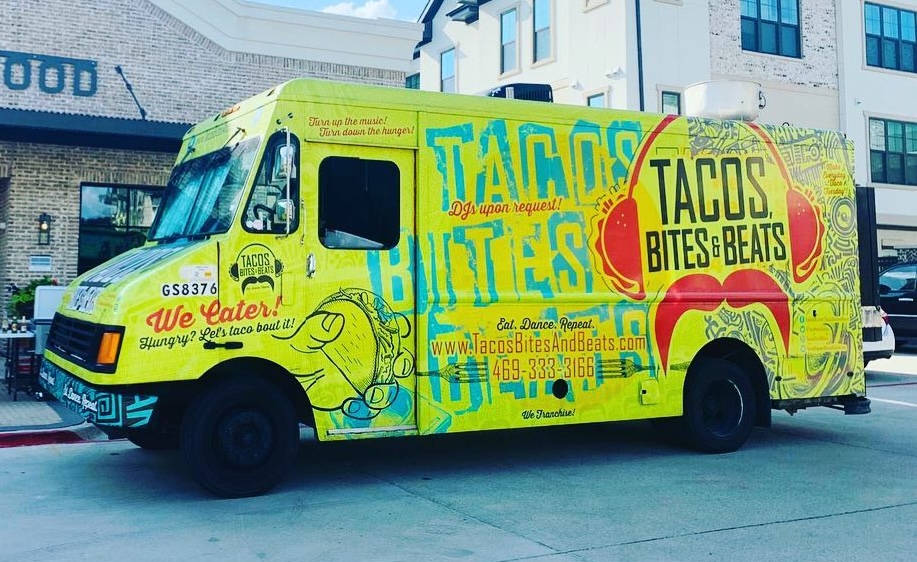
The Complete Guide to Food Truck Catering: How It Works, What It Costs, and How to Book
Food truck catering has gone from novelty to standard practice for corporate events, weddings, birthdays, and community gatherings across the country. At Food Truck Club, we've helped serve over 345,000+ guests through our platform, coordinating everything from single-truck office lunches to six-truck events feeding 800 people. Along the way, we've learned exactly what makes mobile catering work — and where things go sideways when people skip the details.
This guide covers how the booking process actually works, what it costs based on real events, how to choose the right truck for your situation, and what to do when plans change at the last minute. Whether you're an office manager booking your first employee appreciation lunch or a seasoned event planner adding food trucks to your toolkit, everything here comes from real bookings, real clients, and real data.
What Is Food Truck Catering and How Is It Different from Traditional Catering?
Food truck catering is a mobile catering service where a fully equipped kitchen on wheels arrives at your event location, prepares food on-site, and serves guests directly from the truck window. Unlike traditional catering, food trucks are self-contained — they bring their own cooking equipment, refrigeration, staff, and serving setup. There's no need to rent chafing dishes, hire separate servers, or find a venue with a commercial kitchen. The truck parks, sets up in 15–30 minutes, and starts serving.
The biggest practical difference is freshness. Traditional caterers often prepare food hours in advance and transport it in warming trays. Food trucks cook everything to order on-site, which means your guests get meals that were made minutes ago, not hours. It also means the menu stays flexible — trucks can adjust portions, accommodate last-minute dietary requests, and keep food coming as long as the event runs.
| Factor | Food Truck | Traditional Caterer |
|---|---|---|
| Cost per person | $10–25 | $30–60+ |
| Setup required | Parking space only | Kitchen, tables, serving area |
| Food freshness | Cooked to order on-site | Pre-prepared, transported in warmers |
| Cleanup | Truck handles everything | Client or caterer cleans venue |
| Menu variety | Book multiple trucks for variety | Single menu per caterer |
| Guest experience | Interactive, casual, fun | Formal, structured |
That said, food trucks aren't the right fit for every event. Formal seated dinners, events in buildings without nearby parking, or situations where you need plated multi-course service are better served by traditional catering — our food truck vs. traditional caterer decision guide walks through exactly when each option wins. Food trucks shine when you want a casual, high-energy atmosphere with fresh food and flexibility. According to The Knot's 2023 Real Weddings Study, 4% of couples now hire a food truck for their wedding — a small but growing share that reflects the format's expanding appeal beyond casual events.
How Much Does It Cost to Hire a Food Truck?
Food truck catering costs $10–25 per person for most cuisines, with the final price depending on the menu type, guest count, service duration, and your location. Taco and street food trucks tend to land on the lower end at $9–15 per person, while BBQ, seafood, and gourmet options run $15–25. Most trucks also set a minimum booking amount — typically $500–$1,500 — which covers travel, setup, staffing, and base food prep regardless of how many guests show up.
These numbers come from real events on our platform. When Kimley-Horn booked a truck for a 200–250 person corporate event, they got fast, professional service at a fraction of what traditional catering would have cost. Their event planner noted the truck "arrived on time, set up quickly, and expertly handled about 200–250 guests in the span of an hour and a half."
| Cuisine Type | Per Person | Typical Minimum |
|---|---|---|
| Tacos & Tex-Mex | $9–15 | $500–800 |
| Burgers & American | $12–18 | $600–1,000 |
| BBQ & Smoked Meats | $14–25 | $800–1,500 |
| Asian & Fusion | $12–20 | $600–1,000 |
| Wood-Fired Pizza | $12–18 | $700–1,200 |
| Desserts & Ice Cream | $5–12 | $300–600 |
What Drives the Price Up or Down
Weekend bookings (especially Saturdays) typically carry a 10–20% premium. Travel beyond the truck's home radius adds $1–3 per mile. Extended service windows beyond the standard 2–3 hours cost $100–200 per additional hour. Peak season — May through October in most markets — means higher demand and less flexibility on pricing. According to the Bureau of Labor Statistics, food service labor costs have risen steadily, which affects both food trucks and traditional caterers.
On the other hand, weekday events, midday time slots, and ordering for larger groups (over 100 guests) often qualify for better per-person rates. Many truck operators offer package deals for recurring bookings — companies like Albertsons and Metro by T-Mobile book through our platform regularly and benefit from established relationships with their preferred trucks. According to Global Market Insights, the food truck industry was valued at $6.1 billion in 2024 and is projected to reach $11.9 billion by 2034 — driven in part by corporate clients who value the combination of quality and cost efficiency.
Real number to plan around
Based on events on our platform, most single-truck bookings land between $1,200 and $3,500 total for 75–200 guests. For multi-truck events, budget $2,500–6,000+ depending on how many trucks and the service duration.
How Does the Booking Process Work?
Booking a food truck follows five steps: sharing event details, getting matched with available trucks, reviewing quotes and menus, finalizing details and securing your booking with payment, and showing up on event day while the truck handles everything else. Most bookings go from first contact to a confirmed reservation within a few days, though corporate events with multiple trucks take longer to line up. See our how it works page for a quick visual overview. The process is simpler than traditional catering because the truck is self-contained — there's no venue kitchen to coordinate, no rental orders to place, and no serving staff to hire separately. For a closer look at the booking platform and technology that powers this process, see our technology deep-dive, and for how the main booking platforms differ on speed and pricing, read our food truck booking platform comparison.
- Share your event details — Tell the platform or truck operator your date, time, location, estimated guest count, and any dietary requirements. This takes about 5 minutes.
- Get matched with trucks — Based on your requirements, you'll receive options with menus, pricing, and availability. On Food Truck Club's marketplace, trucks are verified and reviewed by past clients so you can compare with confidence.
- Review quotes and menus — Compare per-person pricing, minimum spend requirements, and menu options. Ask about customization — most trucks are happy to adjust menus for your event.
- Finalize details and secure your booking — Confirm the final guest count, parking location, power access, and any menu adjustments. Once everything is set, full payment locks in your truck. We also accept deposits upon request if you'd prefer to split it up.
- Event day — The truck arrives 30–45 minutes early to set up. Service runs for the agreed window (typically 2–3 hours). The crew handles all cooking, serving, and cleanup. When they leave, there's nothing for you to deal with.
Two Payment Models: Host-Pay vs. Attendee-Pay
Most catered events use the host-pay model, where the event organizer covers the full bill. But some food trucks also support attendee-pay (walk-up) service, where guests order and pay individually — similar to visiting a food truck at a festival. Walk-up works well for community events, apartment complex gatherings, and casual office lunches where the company subsidizes part of the cost but guests choose their own meals.
How to Choose the Right Food Truck for Your Event
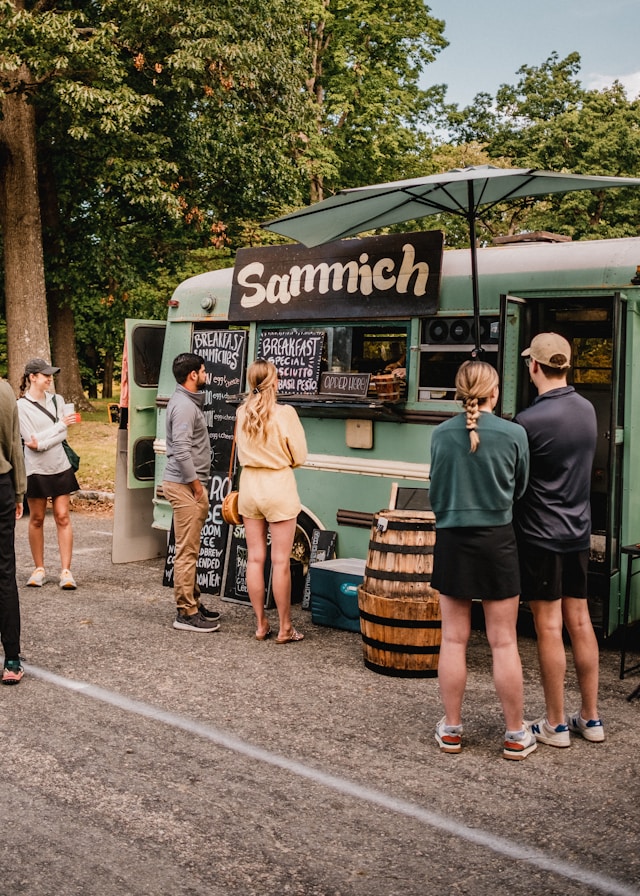
Choosing the right food truck means evaluating four factors: cuisine match for your audience, serving capacity for your guest count, the operator's review history for reliability, and dietary accommodation flexibility. A truck that's perfect for a corporate lunch — crowd-pleasing tacos or burgers — may not suit a birthday party or a wedding where you want something more distinctive. Here's how to narrow it down.
Match Cuisine to Your Audience
For corporate events, pick crowd-pleasers with broad appeal — tacos, burgers, and BBQ consistently get the best feedback. Food truck weddings call for something more distinctive: wood-fired pizza, gourmet sliders, or fusion menus that feel special. Birthday parties and casual gatherings work best with interactive, fun options. On our platform, tacos, BBQ, and American fare are the three most-booked cuisine categories across all event types. Browse taco trucks in Houston or BBQ trucks in Dallas to see what's available. If you're leaning toward smoked meats, our BBQ food truck catering guide covers pricing tiers, portions, and minimums in detail.
Plan for Capacity
A single truck comfortably serves 75–150 guests during a standard 2–3 hour service window. For events with over 150 guests, you'll want multiple trucks. The math is straightforward: plan for one truck per 75–100 guests to keep wait times under 10 minutes. When one client booked six trucks for an 800-person corporate event through our platform, the result was short lines, diverse options, and a rave review: "I could not have had a better experience. I would give 10 stars if I could." We've since topped that — see how we coordinated 9 trucks for 2,455 people across 3 locations in a 2-hour window for Christus Health.
Check Reviews and Track Record
A truck's menu might look great, but reviews tell you about reliability, punctuality, and service quality — the things that actually make or break your event. Look for mentions of "on time," "professional," and "great communication." Our platform maintains a 4.9-star average across Google Reviews precisely because we vet every truck partner. The standard food business insurance requirements include verifying that any food service vendor carries general liability, product liability, and workers' compensation coverage before signing a contract.
Consider Dietary Needs
Ask trucks directly about vegetarian, vegan, gluten-free, and allergy accommodations before booking. Most trucks can adjust their menus, but the range varies. Taco and Asian fusion trucks tend to have the most built-in flexibility for dietary restrictions. One of our truck partners, Homies, changed a recipe on the spot to accommodate a guest who needed a non-spicy option — that kind of flexibility is common with food trucks but rare with traditional caterers. The FDA's food allergen guidelines identify nine major allergens (including the recently added sesame) that food service providers should accommodate.
Why Companies Are Hiring Food Trucks for Corporate Events
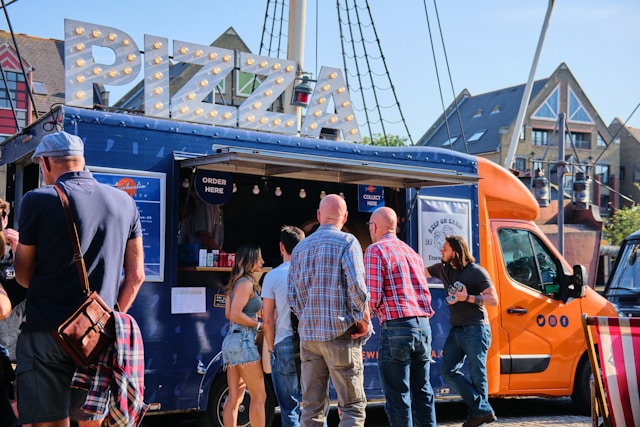
Corporate events are a major use case for mobile catering, and the format is growing fast. According to IBISWorld, the U.S. food truck industry reached $2.8 billion in revenue in 2025, growing at a 13.2% annualized rate over the past five years, with corporate catering representing an increasing share. Companies use food trucks for employee appreciation days, client entertainment, team lunches, holiday parties, and recurring lunch programs. The draw is straightforward: trucks deliver a memorable experience at a lower cost than traditional corporate catering, with no venue kitchen or rental equipment needed.
Multi-Truck Events for Large Teams
The scale ranges widely. We've coordinated single-truck lunches for teams of 30 and multi-truck events for Fortune 500 companies. Medline ran an entire Employee Appreciation Week through our platform with four different food trucks across multiple days — Foreign Policy, Il Mio Amore, Mingo's Latin Kitchen, and Whatcha Cravin — giving employees a different cuisine experience each day. The FBI's Dallas office booked three trucks (Street Bites, Twin Stacks BBQ, and Taste of Louisiana) for a single event, with reviewers praising both the food and the "professionalism of the team." For companies in Houston, Dallas, San Antonio, or any of our 8 markets, we handle the multi-truck coordination so the event planner doesn't have to. For city-specific pricing and truck recommendations, see our guides for Dallas, San Antonio, Austin, and Philadelphia.
Recurring Programs Build Loyalty
Some of the strongest results come from companies that make food trucks for parties and team events a regular benefit. Albertsons books trucks repeatedly at their distribution centers — their team has called Crazy Burger back twice, noting "everybody loves it" and "the food is always fresh and hot." Metro by T-Mobile uses Street Bites for recurring customer appreciation events, reporting they're "always fantastic." These repeat bookings work because the truck operators learn the client's preferences, parking logistics, and timing — each event runs smoother than the last.
From a real client
"The experience was outstanding from start to finish! They worked closely with us to accommodate our unique schedule, ensuring every shift was served fresh, delicious BBQ." — Stanley Black & Decker, multi-shift corporate catering with Tasty Tate's BBQ
For a deeper look at why companies are switching from boxed lunches to food trucks — including real costs and more client stories — see our corporate food truck catering guide.
What Can Go Wrong (and How to Prepare)
Mobile catering is reliable when you plan for the variables. Most issues come down to weather, logistics, or last-minute changes — and experienced truck operators handle all three routinely. Here's what to watch for.
Weather Doesn't Cancel Food Trucks
This is one of the most common concerns, and it's usually overblown. Trucks operate through rain, heat, and even ice storms. When an ice storm hit Dallas during an Albertsons event, the Cheddr Wheel team "went above and beyond to make sure our associates were taken care of" despite the challenging conditions. Houston Made Burgers showed up to an event where "their trailer was stuck in mud" from morning rain — they got it out and still arrived on time. Have a shaded or covered area for your guests, and trust that the truck will show up.
Parking and Power Are the Real Logistics
A standard food truck needs approximately 40 feet of length and 12 feet of width for parking. Most trucks carry their own generator, but confirm this during booking. If your venue is a parking garage, building loading dock, or narrow residential street, discuss dimensions with the operator beforehand. For office parks and corporate campuses, coordinate with your facilities team to reserve the parking spot and ensure the truck can access it without gate codes or security delays. The NFPA's food truck safety guidelines recommend maintaining adequate clearance from buildings and other vehicles, and most municipalities require trucks to follow NFPA 96 standards for ventilation and fire suppression.
Last-Minute Changes Happen
Guest counts shift, timelines move, and sometimes plans change with 48 hours' notice. This is where working with experienced, reviewed truck operators matters. When a client needed to move their event two hours earlier, Mingo's Latin Kitchen "came to my rescue" and adjusted without issue. When another food truck for a corporate event cancelled last minute, Mingo's stepped in and "helped make accommodations" to save the day. Flexibility is one of the biggest advantages of hiring a food truck over traditional catering, where changes often mean penalty fees.
Verify Insurance and Permits
Reputable operators carry general liability insurance (typically $1 million minimum) and maintain current health permits in compliance with the FDA Food Code. Ask for proof of both before your event, especially for corporate events where your company may require certificates of insurance. On Food Truck Club, every truck is verified before joining the platform, which takes this due diligence off your plate.
Food Trucks for Weddings, Birthdays, and Private Parties
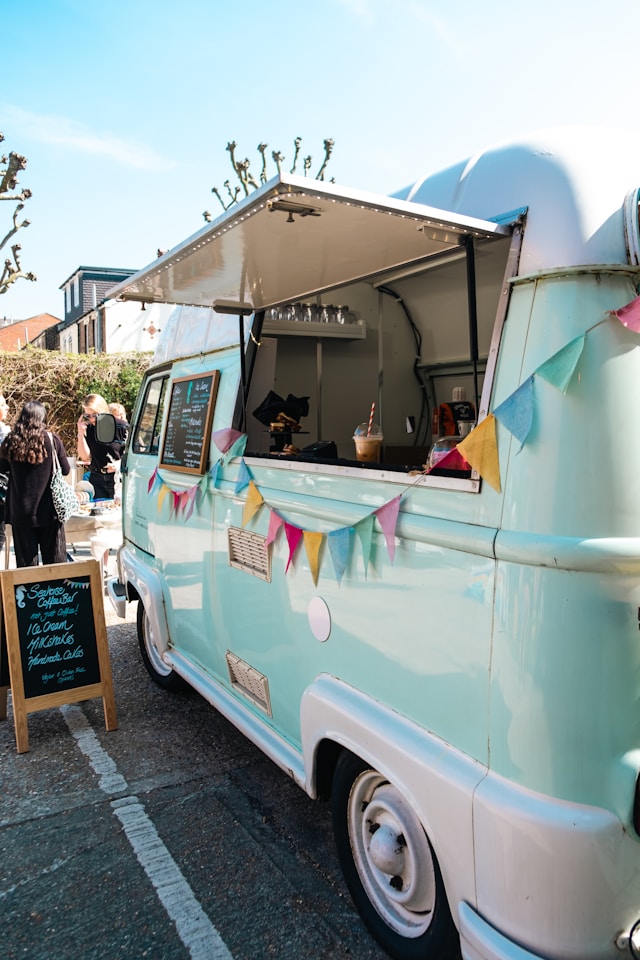
Food trucks are an increasingly popular catering choice for weddings, birthdays, graduations, and private celebrations — offering fresh food, flexible menus, and a casual atmosphere at 20–40% less than traditional event caterers. According to The Knot's 2023 study, 4% of nearly 10,000 newlyweds surveyed had a food truck at their celebration, and that number is trending upward as couples prioritize interactive guest experiences over formal plated dinners.
Food Truck Weddings
A food truck wedding works best during cocktail hour or as a late-night snack station, though some couples use trucks as the primary reception caterer. For a detailed cost comparison with traditional wedding caterers and sample budgets by guest count, see our food truck wedding cost breakdown. The key logistics: coordinate arrival times with your venue and wedding planner so the truck sets up during the ceremony, not during cocktail hour. Plan for 1 truck per 75–100 guests, and confirm the venue has a flat, accessible parking area. The Weenie Wagon catered one client's wedding and was "a hit," while Tacos El Primo de Monterrey catered another where "everyone kept telling us the food was amazing." For outdoor weddings, having a tent or covered area near the truck keeps guests comfortable in any weather. For a detailed wedding planning checklist, costs by service window, and cuisine pairing advice, see our food truck wedding guide.
Birthday Parties and Graduations
For birthday parties, the food truck itself becomes part of the entertainment. Kids love the novelty of ordering from a truck window, and adults appreciate not having to cook, serve, or clean up. Gabino's Wood Fired Pizza catered a graduation party where "guests devoured a steady stream of delicious pizzas for the entire 4 hours." A food truck rental for a party simplifies logistics — the truck brings everything, serves everyone, and leaves your venue spotless. For a closer look at why pizza trucks are one of the fastest-growing catering options, see our pizza food truck catering guide. For birthday-specific ideas, costs by guest count, and a planning timeline, see our food truck birthday party guide; for open-house graduation parties, which run longer and fill up May weekends fast, see food trucks for graduation parties.
University and Sports Team Events
College athletic departments are one of the fastest-growing segments for food truck catering. Since the NCAA's 2014 unlimited meals rule, programs need to feed athletes more often — and food trucks offer a flexible, budget-friendly alternative to building dedicated dining facilities. From post-practice team meals to recruiting dinners and game day tailgates, food trucks handle the volume and variety that college sports demand. For a complete breakdown of costs, use cases, and logistics, see our college sports team catering playbook.
Beverage and Dessert Trucks
Pairing a main course truck with a beverage or dessert truck is the most popular multi-truck combination on our platform. Coffee trucks like Lillian's Sit N' Sip (whose owner was described as "wonderful" with "phenomenal" coffee) are perfect for morning corporate events and brunch celebrations. For evening events and weddings, specialty beverage trucks add a bar-like experience without the liquor liability headaches of a full bar setup. Dessert trucks from partners like The Baked Bear and Mister Softee keep the party energy going between courses and give guests variety without any extra coordination on your end.
Variety is one reason to add a truck; service speed is the other. If you're weighing a second truck to keep lines moving rather than to widen the menu, our analysis of how many trucks a guest count actually needs works through the math.
Are Food Trucks Cheaper Than Traditional Catering?
Yes — food truck catering typically costs 20–40% less than traditional sit-down catering for comparable food quality. Most trucks charge $10–25 per person, while traditional caterers average $30–60 per person when you include staffing, equipment rentals, and venue fees. The savings come from the truck's self-contained model: there's no separate kitchen to rent, no serving staff to hire, no china or linens to source, and no post-event cleanup crew.
For a 100-person corporate event, a truck might run $1,500–2,500 total. The same event with a traditional caterer could easily reach $4,000–6,000 once you add service charges, gratuity, and rental fees. According to Tripleseat's catering pricing research, traditional caterers add a standard service charge of 18–25% on top of food costs — a premium that food trucks largely eliminate because their lean crews and self-contained setup keep overhead low.
How Much Should You Tip a Food Truck Caterer?
A 15–20% tip on the total bill is standard for food truck catering, consistent with restaurant tipping norms. For a $2,000 catering bill, that's $300–400 split among the crew. Some clients prefer a flat tip of $50–100 per crew member, especially for smaller events where the percentage calculation feels disproportionate.
Tip on the higher end when the crew went above expectations: handling last-minute guest count changes, working through bad weather, staying past the agreed service window, or accommodating special dietary requests on the spot. Many of the five-star reviews on our platform mention exactly this kind of above-and-beyond service. Cash tips handed directly to the crew are always appreciated and ensure the people who did the work receive the full amount. For a deeper breakdown, see our full food truck tipping guide.
How Far in Advance Should You Book a Food Truck?
A couple of weeks of notice covers most events, and week-of works more often than not. Large-scale events (200+ guests), multi-truck coordination, weddings, or peak season dates (May through October) go first, so book those early. Popular trucks with strong review histories fill their calendars fastest — if you have a specific truck in mind, earlier is better.
But if your event is coming up fast, don't count yourself out. We handle last-minute bookings regularly — even with just a few days' notice. One client booked Twin Stacks BBQ on short notice and praised the team for being "very responsive" and easy to work with. Food Truck Club makes it easy to see real-time availability across multiple trucks in Houston, Dallas, San Antonio, Austin, and 4 other cities, so you can quickly find trucks that are available for your date.
Food Truck Club connects businesses and event planners with verified food truck caterers across 12 metro areas. With 345,000+ guests served and a 4.9-star Google rating, our guides are based on real event data, client reviews, and direct partnerships with food truck operators. Follow us on LinkedIn.
Ready to Book?
Browse verified food trucks in Houston, Dallas, Austin, Chicago, Atlanta, and 3 more cities. Compare menus, read reviews, and book directly.