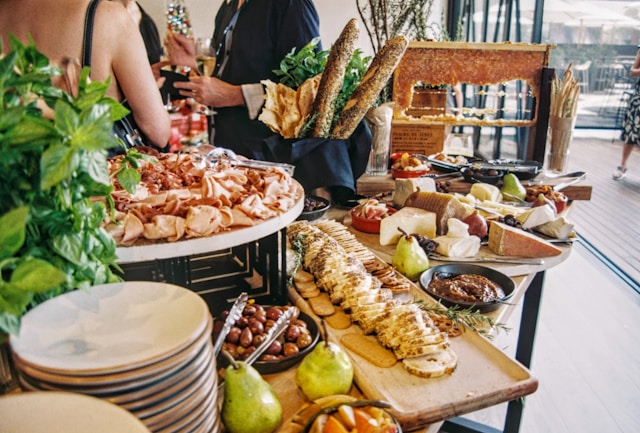
Food Trucks for Weddings: The Complete Planning Guide to Costs, Truck Counts, Venues, and Booking
Food trucks for weddings work best as a main reception meal, a cocktail-hour station, or a late-night snack, and they cost a fraction of a plated caterer. The questions couples ask are practical ones: how many trucks does a 150-guest wedding need, will the venue allow a truck, what does wedding food truck catering actually cost, and how far ahead do you book?
At Food Truck Club, we've coordinated food truck catering for weddings, receptions, and rehearsal dinners — from intimate 50-person celebrations to multi-truck receptions feeding hundreds. This guide answers those questions in order: real costs, truck counts and venue logistics, cuisine selection, the booking timeline, and where to browse wedding food trucks in your city.
If you're new to food truck catering in general, our complete guide to food truck catering covers the full process. This article focuses specifically on what makes weddings different.
Every wedding on Food Truck Club is backed by our Satisfaction Guarantee
Your event gets a dedicated coordinator, proactive day-of monitoring, and full refund protection if anything isn't right. See the full guarantee.
How Much Does a Food Truck Wedding Cost?
Food truck wedding catering costs $10–25 per person for most cuisines, compared to $46–55 per person for traditional wedding caterers — a savings of 50–80% on food alone. For a 150-guest wedding, that means spending $1,500–3,750 on food truck catering versus $6,900–8,250 with a conventional caterer. Additional costs include a minimum booking fee ($800–1,500 per truck), travel charges if the venue is outside the truck's standard service area, and optional add-ons like a dessert or beverage truck.
Traditional wedding catering averages $46–55 per person nationally, according to Zola's 2026 wedding cost data — and that's before service fees, rentals, and gratuity push the real cost higher. Food trucks eliminate most of those extras because the truck is its own kitchen, its own serving station, and its own cleanup crew.
| Service Window | Food Truck (per person) | Traditional Caterer (per person) |
|---|---|---|
| Cocktail hour (appetizers) | $8–15 | $20–35 |
| Main reception meal | $14–25 | $46–55 |
| Late-night snack | $6–12 | $15–25 |
| Dessert truck add-on | $5–10 | $8–15 (dessert station) |
For a realistic all-in budget, plan for $20–35 per person when you factor in the main course truck plus a dessert or beverage truck. That's still 40–60% less than a traditional caterer. Our full wedding cost breakdown includes sample budgets at 50, 100, 150, and 200 guests with every hidden cost itemized. The pricing guide breaks down costs by cuisine type, and the tipping guide covers standard gratuity expectations so there are no surprises.
How Do Food Trucks Work at a Wedding?
Food trucks at weddings follow a three-step process: you browse and select a truck based on cuisine and reviews, submit your event details (date, venue, guest count, and menu preferences), and receive confirmation with an invoice — typically within 24 hours. On the wedding day, the truck arrives 60–90 minutes before service to set up and fire up the kitchen. Most couples use food trucks during cocktail hour, as the main reception meal, or as a late-night snack — though some use all three windows with different trucks.
The booking process takes about 5 minutes through our platform. Here's how it works: browse trucks by cuisine and location, submit your event details through the truck's profile page, and wait for confirmation. No money changes hands until the truck confirms your date.
Truck Count and Guest Capacity
Plan for one food truck per 75–100 guests for a main course. A single truck can serve about 50–65 plates per hour, according to Honeyfund's 2026 wedding cost guide, so a 150-guest wedding needs two trucks to keep wait times under 15 minutes. Dessert and beverage trucks serve faster — one can typically cover 150+ guests since the items are quicker to plate.
Venue Logistics You Can't Skip
Not every venue accommodates food trucks. Before you book, confirm these four things with your venue coordinator:
- Flat, accessible parking — the truck needs 20–30 feet of paved or hard-packed surface. Grass, gravel, and steep grades are problems.
- Power access or generator clearance — some venues prohibit generators after a certain hour. Ask about noise restrictions.
- Fire code compliance — propane equipment must meet local fire code spacing requirements. The NFPA's food truck safety guidelines are the industry standard.
- Insurance requirements — most venues require the truck to carry $1 million in general liability and may need to be named as an additional insured. Reputable trucks carry this coverage already, but confirm 30 days before your date. Event insurance providers can help if your venue has specific requirements.
Host-pay is the standard arrangement for weddings — you pay the full invoice, and your guests eat free. This is different from corporate events where attendee-pay (guests order and pay individually) is common. When you submit your event details on our platform, you'll choose the payment structure upfront. For private event catering, host-pay is what most couples expect.
What to Serve: Picking the Right Cuisine for Your Wedding
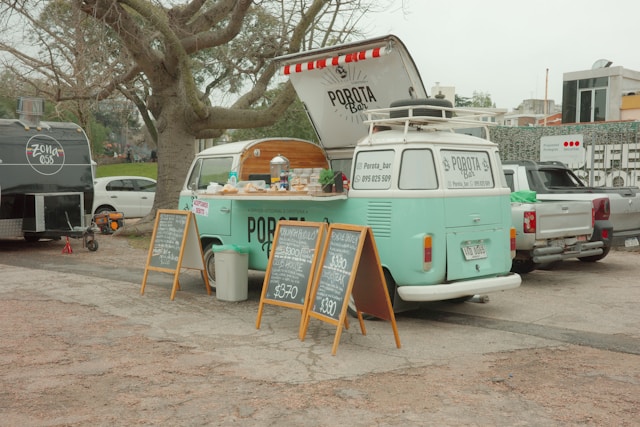
The cuisine you choose shapes the energy of your reception more than almost any other decision. A wood-fired pizza truck creates a laid-back, shareable atmosphere. A taco truck keeps the line moving fast and handles large groups efficiently. BBQ works for hearty, no-fuss celebrations. And gourmet sliders or fusion trucks give you a distinctive menu that feels elevated without the formality of plated service.
The key question isn't "what sounds good" — it's "what serves well at speed for my guest count and venue?" A taco truck wedding works brilliantly for 200 guests because tacos are fast to assemble and easy to eat standing up. A wood-fired pizza truck is perfect for 75–120 guests at a venue with tables, since pizza requires a plate and a place to sit.
The Dessert Truck: Your Reception's Secret Weapon
Pairing a main course truck with a dessert truck is the most popular multi-truck combination on our platform — and it's especially effective at weddings. The dessert truck replaces the traditional cake-cutting moment with something interactive: guests choosing their own ice cream sandwiches, churro sundaes, or gourmet popsicles. It keeps the party energy going between dinner and dancing.
One couple booked Dippin' Dots for their wedding reception and reported they were "a hit at my wedding" — a low-cost, high-impact add-on that gave guests a fun, shareable moment without the formality of a dessert course.
For the main course, wood-fired pizza trucks bring a distinctly elevated feel to wedding receptions. Satellite of Pizza is a Houston-based option whose clients consistently praise the food quality and professionalism — "Everyone loved how friendly the guys were, the cleanliness and how delicious the pizza was." That's the kind of reliability you need when the food is the centerpiece of your reception.
Dietary Accommodations
Dietary restrictions are more manageable with food trucks than most couples expect. Because everything is made to order, trucks can often adjust recipes on the fly — swapping a protein, holding an ingredient, or preparing a separate batch for guests with allergies. The best approach: share your guest list's dietary needs when you submit your event details, and the truck operator will flag what they can and can't accommodate before you commit. If you have guests with severe allergies, check the FDA's allergen guidance and discuss cross-contamination protocols with your truck.
Peak season booking tip
For peak wedding season (June–October), book your food truck 3–4 months ahead. Popular trucks with strong review histories fill their calendars fastest — if you have a specific truck in mind, start early.
How Far in Advance Should You Book a Food Truck for a Wedding?
A food truck needs far less notice than the rest of a wedding: a few weeks is usually plenty. During peak wedding season (June through October) the popular trucks go first, so lock the truck as soon as the date is set, and if you have a specific truck in mind, earlier is always better. Start by confirming your venue allows food trucks — not all do — then submit your event details through the truck's profile page to lock in your date.
Week-by-Week Planning Checklist
- 3–4 months out — Confirm your venue allows food trucks. Check parking access, power availability, and insurance requirements. Browse trucks on our platform by cuisine and read reviews.
- 2–3 months out — Submit event details to your top 2–3 truck choices. Discuss menu options, guest count, and any dietary restrictions. Lock in your booking once the truck confirms.
- 4–6 weeks out — Finalize the menu and service timeline with your truck operator. Coordinate arrival and setup times with your venue and wedding planner. Confirm the truck's insurance certificate names your venue.
- 2 weeks out — Confirm final guest count and share it with the truck. Verify the day-of contact person and phone number. Plan a rain contingency if your reception is outdoors.
- Day of — The truck arrives 60–90 minutes before service. Your point person meets them, confirms the setup location, and that's it — the truck handles the rest.
Weather Contingency
Most food truck weddings are outdoors, which means weather is a real variable. The best contingency: set up a tent or canopy near the truck's serving window so guests stay dry or shaded while they wait. Some couples designate an indoor fallback where the truck crew can set up a buffet-style spread if the truck can't operate (rare, but worth planning). If your wedding is during summer months, keep in mind that trucks need shade too — direct sun heats the interior and can slow service.
What Reliability Looks Like
The biggest fear with a food truck wedding is that something goes wrong and there's no backup plan. When you book through Food Truck Club, your wedding gets a dedicated event coordinator who aligns the truck's arrival with your reception timeline — ensuring setup is complete 60–90 minutes before service so there are no last-minute surprises during cocktail hour.
For outdoor receptions, your coordinator works with you on a weather contingency plan well before the wedding day: identifying covered serving areas, coordinating tent placement near the truck's window, and having a communication plan in place if conditions change. You won't be checking radar on your wedding morning — your coordinator already has.
On the day itself, Food Truck Club monitors your event proactively. Your coordinator confirms the truck is en route, verifies setup is on schedule, and stays reachable throughout service so you and your wedding party never have to check on the food. If anything isn't right, our Satisfaction Guarantee provides full refund protection — because your wedding day isn't the place for "good enough."
Couples who've booked through our platform consistently praise this level of coordination. Tacos, Bites, & Beats, a Dallas-based taco truck popular for rehearsal dinners and intimate receptions, earned one client's note that "they arrived early, had delicious food, friendly staff and good music." For larger receptions, The Branded Cow in San Antonio is a strong pick for burger-and-slider-style celebrations — one private party host called them "a huge success" and noted the quality held up even at scale.
When a Food Truck Isn't Right for Your Wedding
Food trucks are a strong choice for casual, outdoor, and semi-formal receptions — but they're not the right fit for every wedding. If your reception requires plated multi-course service with formal table settings, a food truck can't deliver that experience. Indoor-only venues without adjacent parking or outdoor access make truck logistics difficult or impossible. And very formal black-tie affairs, where the food service is part of a choreographed evening, are better served by a traditional caterer with a dedicated wait staff.
The honest answer: food trucks shine when you want fresh, made-to-order food in a relaxed atmosphere where guests mingle and move freely. If that matches your wedding vision, a food truck will save you money and create a more memorable experience. If it doesn't, that's okay — the right catering format is the one that fits your event, not the one that costs less.
Where to Find Food Trucks for Your Wedding
Trucks serve the metro they are based in, so start with the roster for the city nearest your venue. Each listing shows the cuisine, menus, real client reviews, and a booking form; filter by cuisine if you already know you want tacos, pizza, or a dessert truck.
- Wedding food trucks in Atlanta, GA
- Wedding food trucks in Austin, TX
- Wedding food trucks in Boston, MA
- Wedding food trucks in Chicago, IL
- Wedding food trucks in Dallas, TX
- Wedding food trucks in Detroit, MI
- Wedding food trucks in Houston, TX
- Wedding food trucks in New York, NY
- Wedding food trucks in Philadelphia, PA
- Wedding food trucks in Phoenix, AZ
- Wedding food trucks in Riverside, CA
- Wedding food trucks in San Antonio, TX
Food Truck Club connects couples, businesses, and event planners with verified food truck caterers across 12 metro markets. With 345,000+ guests served and a 4.8-star average across 650+ reviews, our guides are based on real event data, client reviews, and direct partnerships with food truck operators. Follow us on LinkedIn.
Ready to Plan Your Food Truck Wedding?
Browse food trucks by cuisine, read real client reviews, and submit your wedding details in about 5 minutes. We'll match you with trucks that fit your date, guest count, and budget — all backed by our Satisfaction Guarantee.